Lessons from Mohnish Pabrai
In this piece, I go over my recent interview with Mohnish Pabrai, and show some of his social entreprenurial success with the Dakshana Foundation! (For a case study of Pabrai’s “heads I win, tails I don’t lose much” philosophy in action, see:First Avenue)
A couple months ago, I had the pleasure of having Mohnish Pabrai Zoom into William & Mary for Q&A with students! Mohnish is an entrepreneur, investor, and philanthropist.
Mohnish founded TransTech in 1991 with $100,000- and sold it in 2000 for $20M. In 1999, he started thePabrai Investment Funds, which has grown to over $600M in assets under management after compounding for north of 13% for the past few decades. In 2007- he was the catalyst for theDakshana Foundation, which takes the brightest and the poorest Indian children and prepares them for the IIT and Medical School exams (MITs of India with <1/2 the acceptance rate). Quite simply, he has been a fantastic business & social entreprenuer!
The Q&A was wide-ranging. From tips for any startup, avoiding self-pity, and how to invest in philanthropy, Mohnish touched every corner of his experience. This was a fun experience for me and I am glad that several students were able to come and enjoy it too!
§Watch Here!
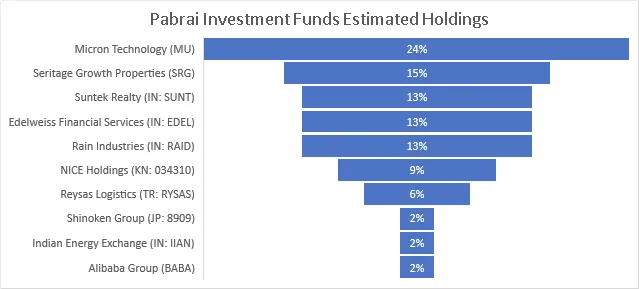
After the Q&A- several people asked me about Pabrai’s holdings. I do not know all of them, but below is a list of the last reported holdings. There are some inaccuracies- such as the fact this is not updated to show his recent Prosus purchase (information here).
Also- this is not advice to buy any of these holdings. Do your own research!
2: Philanthropy Done Right
The Dakshana Foundation recently released its 2020 Annual Report, which gives a great overview of the foundation and the philosophy that Mohnish (and his partners) have of giving.
What have they accomplished in 14 years?
IITs have accepted 2,732 Dakshana Scholars (61% success rate versus 2% acceptence rate)
Medical Colleges accpeted 911 Medial Stream Scholars (67% success rate versus <1%)
This has been accomplished by constant experimentation and iteration on the model- with a relentless focus on measuring the ROI of their investments. It also helps that Dakshana is self-sustaining at this point!
The foundation has a clear focus on reducing costs to maximize their ROI for each scholar- with the average cost to produce an IITian or a Doctor being $4,000.
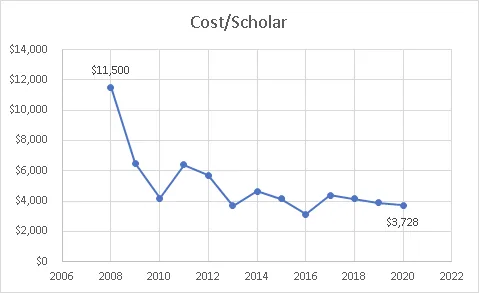
These scholars go on to work at Google, Amazon, Paytm, the Indian Government, or many other well-paying jobs. The average graduate makes $16,000 annually their first year out- and if we use that as a proxy for their contribution to society- then with 40 years of work at 5% annual salary growth, the average IITian contributes ~$2M to society- a 500x return over 40 years!
There is much more data out there on Dakshana- and I reccomend you check them out. They have a facinating philanthroptic model- and it’s working!