AI Deployment Surfaces: Why Enterprises Fail
AI in the Enterprise has a distribution problem, not an intelligence problem. Model capabilities continue to improve, yet enterprise adopters are still stuck between a handful of power users and generic ChatGPT tabs. These agents have become hyper-intelligent, to the point where capabilities are no longer the issue. Enterprises are still struggling to circulate these new tools through their organization, and it’s because of where the models live. Expecting teammates to adopt new platforms is not a durable way to disseminate new technology throughout an organization.
§Distribution matters
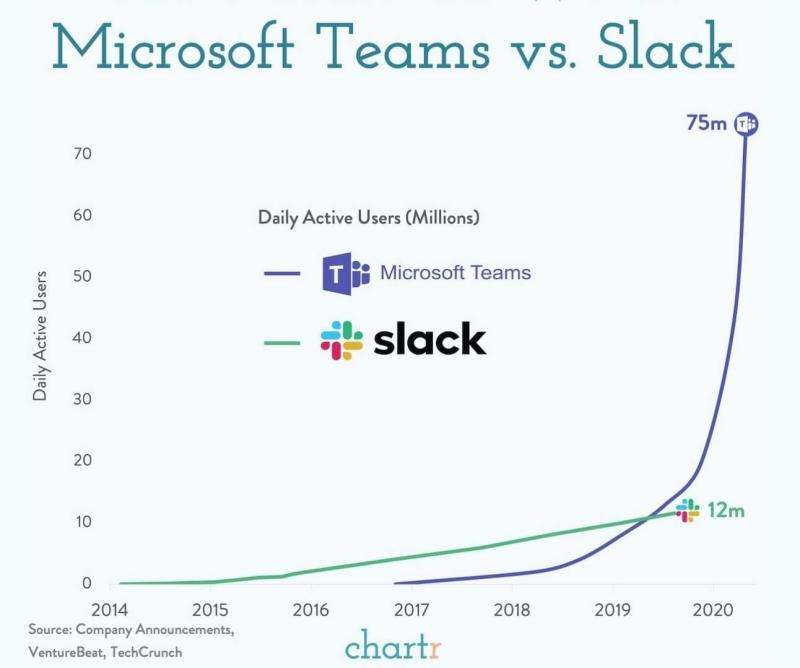
When companies deploy AI outside of existing systems, new bots, apps, and accounts, adoption collapses. Teams live in Slack, Linear, GitHub, Outlook. Adding another tab and another software vendor to learn about adds unnecessary friction. While IT teams understandably isolate LLMs for data control, forcing isolated platforms ultimately suffocates adoption.
Tools that survive company adoption look like Claude Tag in Slack, Atlassian’s products in Jira, Instinct in iMessages. Bringing the LLMs into surfaces we already understand and know. We’ve also built some for clients and ourselves. The friction to onboard is lower. It shouldn’t even feel like onboarding when their LLM is a taggable object in Slack. Adding AI to what you already know beats out adding two new tools at once (the model and its surface). Even the most powerful models hit a wall when they ignore user friction and accessibility.
Powerful models hit the same wall. ZAI released GLM-5.3, which had frontier capabilities at a smaller-model speed. They gave unlimited tokens for a while, yet it launched through the CLI. Great for programmers, non-programmers can’t touch it. It’s unreasonable to expect someone who’s never opened a terminal to try it out. Some early adopters dabble in MCPs and side tools, but that’s not how you reach a business. The surface is the bottleneck, not the capability.
And the opposite mistake is worse. Connecting your agent to everything at once also doesn’t work for the enterprise. Grok Bot has tried this. A beautiful interface, broad integrations, paired with easy onboarding. The concept is elegant, but the problem of permissioning remains. Expecting users to connect their agent to everything and then delegate permissions later is a failure case and a security concern. Giving unfettered access to all of your files and organizational logins isn’t something anybody should be readily excited about.
One LLM to rule them all, One llm to find them; One llm to bring them all and in the darkness bind them

I asked Grok Bot to send me a daily calendar summary and prep me in the morning. First, it fired off inconsistently and broke. Annoying, but expected for a new product. What broke my trust was how it dug into Slack and a random Desktop folder with personal files unrelated to calendaring. After perusing files and articles beyond necessary, it completed the task. But that made me wary of asking for anything sensitive or broad, when Google Calendar and Gmail would have been enough.
The model I have adopted is to treat AI as a remote employee who can’t hop on Zoom. Train and onboard them like any other employee, give them the tools needed, scope to a specific problem set, allow them to learn, and most importantly, put them where I already live. Nobody would add a new tool to talk to a single employee. Instead, we would invite them to Slack, Jira, and more. Treating AI the same, as a new teammate who can contribute as a normal teammate, is the abstraction I expect to stay.
The next phase of enterprise AI is not about better models. It’s improving the current surfaces, meeting teams where they work. The bleeding edge is interesting, but we have to move on from being beta testers. For AI to be adopted in the workforce, we have to be comfortable deploying it in our own environments. Treating it as a teammate who won’t sleep or eat. The companies that move beyond beta-testing and into embedding just added a new teammate for 10% of the cost.
Related reading: Everything Is a Context Problem